Showing posts with label Video Games. Show all posts

Tuesday, July 22, 2008

Now for something completely different

How about making fun of an asinine article about the console wars?

THE ULTIMATE PROOF SONY IS WINNING

OK, I'll bite. There is absolutely no way Mrs. Wells can prove this. None. The only argument one can make for who is "winning" (after a little more than a year, which is moronic) is Nintendo (pure sales) and/or Microsoft (absurd amount of money they make online). That's it. Sure, Sony has a really, really good chance to win when all is said and done, but right now, they're in third.

Forget the analysts.

No.

Forget the NPD sales figures.

No.

Forget the CEO’s.

Alright, I'll forget them, because they'll probably lie.

I live with the ultimate expert on the video game industry—my 16-year-old son.

Oh dear God.

Unless little Jimmy Wells owns all three major consoles, every handheld, a high-end PC, subscribes to every gaming publication, religiously reads video game blogs and has access to economic studies and sales figures, I fucking doubt it.

Oh, he does? Let's hear it then!

He not only plays video games,

What?!

he watches every show about them on G4, he participates in chat rooms about them on the internet, he competes in a variety of games on a variety of platforms.

Funny, I do too. Does that make me an expert? Yes? Awesome. PS3 SUXORZ!!!11!!!111!

He always tells me the latest trend three months before I read about it in the media.

This sounds impressive, but the mainstream media is generally way behind on things people actually enjoy, so this is no surprise. I still see features on the Nintendo Wii and how old people/girls/people with diseases love it and how it's "motion controller is so great because it gets you off the couch, you fat pig!"

But he’s never been a PlayStation fan. Sure, he had a PS1, but as soon as the Xbox came out, it was game over.

So that whole "variety of platforms" thing was kind of, oh, I don't know, a lie?

He loved the Xbox graphics, and once he was old enough to play “Halo,”

Always old enough. Funny, "Halo" is rated M for Mature by the ESRB. That means 17+. For shame!

he loved the games. He graduated to the Xbox 360, Xbox Live, “Gears of War,” etc. He even hung in there during the overheating Xbox “red ring of death” phase. Other than a two-year detour/obsession playing “World of Warcraft” on his computer, he has always been an Xbox fanboy. Sony just didn’t have great games.

What. The. Fuck.

Sony didn't have great games? The PS2 is regarded as one of the best systems ever. Exhibit A: They still make games for it!

Some exclusives (and their gamerankings.com aggregate review scores) the PS2 had that I am sure Mrs. Wells, nor her FPS-loving, idiot son has ever heard of: Final Fantasy X (91.4), XI (85.2, but that was a dumb MMO), XII (91.0), Metal Gears 2 (94.8) and 3 (91.4), God of War 1 (93.2) and 2 (92.5), Okami (92.7), Shadow of the Colossus (91.5), Ratchet and Clank: Up Your Arsenal (91.5) and Going Commando (90.5) and plenty others.

Now the Xbox did have some awesome exclusives - including the aformentioned Halo and it's sequel, Ninja Gaiden 1 & 2, and the Splinter Cell series - but the sheer numbers support the PS2. Of the top 50 reviewed games, Sony's machine has a whooping 45 with a 90 percent or better. The Xbox: 22 out of 50.

The PS2 did have a year on the Xbox, but it's really not a discussion as to what system was better.

Last week he recorded all of G4’s E3 coverage so he could watch it after work (he’s got a summer job to save money to buy gas and videogames, in that order). He was very excited after Microsoft had its news conference. “You can stream Netflix movies onto the Xbox 360!” he exclaimed.

Then he must know you can do roughly the same thing on the PS3 as well!

Then he watched the Sony press conference, and the world as we know it changed.

A little overdramatic (does she work for Sony?), but whatever.

After hearing about “Metal Gear Solid 4”,

Over a month after it had been released. Way to stay on top of trends, Jimmy.

Update: After reading one of the e-mails (from presumably smart gamers) that brings up this same point, Wells responds with this:

Note from Jane: he knew about the game, he just wasn't sold on buying it... as for proof of Sony winning, here's part of an AP report from last week: "Sony Corp.'s PlayStation 3 bested Microsoft Corp.'s Xbox 360 console in June. The PS3 sold 405,500 units compared with just 219,800 for the Xbox 360. The higher PS3 sales were fueled by the launch of the highly anticipated 'Metal Gear Solid 4,' which is available exclusively for Sony's console. The game sold 774,600 copies, not including those bundled with the PS3."

Maybe if he had a PS2 and had played the Metal Gear series, he would have been sold on it. But he just heard that it's "awesome" and needed to buy it to be cool, even though he never played the series before and won't understand 99 percent of what's going on story-wise. But there is shooting!

And so much for "forget the NPD sales figures." For one month. Directly correlated with the release of an ace title. Hypocrite.

as well as other PlayStation exclusives in the pipeline and the awesomeness of Blu-ray, he promptly packed up his Xbox 360 and all his games and went down to Game Stop to trade them in. He bought a PS3 and “Metal Gear Solid 4.” I had to be there to approve the purchase of the M-rated game since he’s not yet 17,

Good parenting Mrs. Let Your Son Play Multiple M-Rated Games Online With Strangers Who Swear Like Sailors And Are Racist/Bigots/Douchebags.

and I was surprised at how rapturous the Game Stop employees were about Sony. They then sold him a USED copy of “Metal Gear Solid 4.”

Because that's how they steal money.

“How can the game already be used?” my son asked. “Because some people get frustrated if they don’t have ‘cheats’,” he was told.

He was lied to then. There's a little site called GameFAQS.com that provides detailed walkthroughs and "cheats" for even the newest games. Jimmy may want to get on that trend so he can stop getting tea-bagged in Halo 3.

I bet someone just stayed up all night and beat the game, then returned for their $20 and cried themselves to sleep for feeding the pirates that are the Gamestop conglomorate. But that doesn't sound as cool as "they didn't have the 'cheats.'" And they'd probably get fired.

But the cashier assured him that the game “was just as good as new.” My son asked, “How can that be?” “Because PlayStation players are ninjas!” was the response.

Mr. Game Stop employee thought "If this dumbass bought that cheat line, he's gotta buy this." But not so fast!

I’m happy to say my son didn’t accept this answer. Perhaps that’s because he’s now spending his own hard-earned money to purchase these games. He said, “Seriously, how does that work?” And the Game Stop fanboys

Wells' definition of fanboy is somewhat muddled. In this usage, the employees at Game Stop are fanboys of Game Stop, i.e. they defend it to the death and berate other game retailers - of which there are few/none.

explained that Sony now has a special coating on Blu-ray game discs which makes them virtually scratch-proof. We shall see.

I have never heard this. My guess: Another lie to innocent little Jimmy.

As we left the store, I said to him, “I never thought I’d see you with a PlayStation.” “Neither did I,” he replied.

As the article ended, I said to myself, "I never thought I'd see an article so dumb about video games." "Neither did I," myself replied.

Thursday, May 15, 2008

Platinum Games ready to kick everyone's ass

Two amazing/absurd/ultra-violent trailers from the up and coming game company, Platinum Games.

MadWorld may take the title of my favorite Wii game away from No More Heroes very quickly.


Thursday, February 07, 2008

Good Idea, Bad Idea: Wii motion controls

For those who don't know, Destructoid.com is a "hardcore" video game blog - they're sort of like an anti-industry, subversive Kotaku. I have been reading the site for a while now and decided to join their vast community of bloggers when they announced a "Monthly Musings" feature.

Here is my entry (minus some pictures, because I am lazy) that should be promoted to their front page (hooray for me!) by the morning 2/7/08.

Nintendo’s Wii is a testing ground for innovative control in gaming today. From various states of waggling, shaking and grips, the consoles titles have been quite varied in their unique control schemes.

But hitting that sweet spot – the perfect balance between traditional and motion controls, has been an uphill battle. How much waggle is too much? Does the title just feel like a port with a few swings and shakes tacked on? Is any of this fun? Successful Wii games have found this harmony, while terrible ones have failed miserably.

Super Paper Mario for the Wii failed to implement motion controls well. While overall a solid title, the game not only tacked motion controls on a game that didn’t need them - they weren’t even tacked on that well.

In this 2D/3D platformer/RPG motion controls are designated to auxiliary items and various niche tasks. To drink a mushroom shake, one must tilt the Wii-remote. An item that drops shooting stars on enemies must be aimed point-and-click style. Players have to shake the remote to break free from ice blocks. While cute at first, these motions become tired, annoying and bothersome as the games goes on.

What developers have to learn is two-fold. First, determine if your game is going to have motion controls in it. Do this from the start, not “oh this is a Wii game. Let’s throw some motion control in.” Secondly, do it correctly. Incorporate it into the core gameplay. Not to the point of excess, but to the point where the player knows and gets used to using it.

Super Paper Mario would have been better as a straight-up, no motion controls platformer. Putting in motion controls just because you can or think you have to, is silly. It would be like using computer generated images in every film. Some are just better without them.

No More Heroes is on the complete opposite end of the spectrum. The third-person action title uses motion control better than any Wii title thus far. A core technique in the gameplay, the motion controls manage to be fun, appropriate and perfectly paced.

The left/right/up/down beam-sword prompts appear multiple times in every fight in the game. And every single time they feel badass. Whether you’re swinging left/right for a decapitation or down to cut someone in half the long way, each flick of the wrist is a satisfying one.

Even more enjoyable than the beam-sword prompts are the wide array of wrestling moves players can perform. These involve nunchuk and remote motion simultaneously – to glorious effect. From the simple “both, up” suplex to the complicated “both, left/both down” slam, each wrestling move is not only satisfying – they feel somewhat realistic.

The biggest praise to No More Heroes has to go to what motion control they didn’t use. When the term “beam-sword” comes to mind, Wii developers must have thought “swing the remote, the sword swings on screen.” By eschewing this trapping, No More Heroes is a much more enjoyable and playable title. Instead, the developers used a simple high/low system (in which pointing the remote up was “high”) that made the game play like a Wii title without screaming “I’m a Wii game! See!” *Swings Wii-remote violently.* My forearm and shoulder owe Grasshopper Manufacture a beer.

Other titles like Zack and Wiki, Metroid Prime 3 and even Madden ‘07 have used motion control with varying degrees of success. But for every title that understands temperance and pacing, there are three that just don’t get it. Even great games like Super Mario Galaxy and Twilight Princess were great despite the motion controls, not because of them. With slightly more than a year worth of titles, Wii motion controls still have quite a way to go.

Monday, January 28, 2008

'Video games as art' debate ends

Before reading any further I highly recommend going here and just going along with what will happen, it should take about 10 minutes at the most. The following will mean much more if you take the 10 minutes.

I would also like to thank Destructoid.com for bringing this to my attention and indirectly causing me to write this.

As video games, the fastest growing and evolving form entertainment, become more and more legitimate in the eyes of the general public, many questions about their merit will arise. Do they have any effect on people’s behavior? How should the government (if at all) legislate them? Are they simply a fad?

Those questions will get answered – indeed some of them already have been. But one will always remain: are video games art?

Video games undoubtedly have the capacity to move a player emotionally. The advances in storytelling, graphics and writing in the industry have elevated many games to almost Hollywood film-like levels. Many a gamer has confessed to crying during Aeris’ unexpected death in the classic Final Fantasy VII or being deeply afraid and disturbed in Silent Hill 2. The question “can video games affect the player?” is not a debate – it is a fact.

But art is a difficult term to define. For a very long time film was not considered art and in some circles, is still not on par with literature and the craft arts (painting, sculpture, etc.). Video games have the stigma of being the new kid on the block. Being barely 30 years old and targeted mostly to the 18-35 male demographic are two major factors that have kept video games from becoming art.

Up until very recently I was inclined to agree with the sentiment that games weren’t art. They have a learning curve, appeal to a somewhat narrow sub-division of people and require significant time/money investments.

All that changed with a game called Passage.

Passage is an extremely minimalist game. Its visuals are no better than any Atari game. The controls are nothing more than the four arrow keys on your computer. Its story – non-existent. In fact it’s difficult to call Passage a “game” at all as there are no goals and it isn’t really “fun.” But if that is true, what is it?

My first play through the game started like any other. I moved my on-screen character from left to right, like thousands of other two-dimensional games, towards some unknown goal. Upon seeing a female character (known as Sally from here on) that looked like mine, I walked up to her, and we were suddenly joined. Upon grabbing some treasure and seeing my presumed score (the number in the top right hand corner) rise, I thought I had the game figured out.

As I progressed it became obvious that I could not access certain areas with Sally. Soon the pixilated characters started to change, subtly at first, only eye and “clothing” color changed. Then my characters began to visibly age, graying hair and a slower walk. Suddenly, Sally died - became a tombstone almost instantly. My avatar became hunched and the soundtrack slowed, with the never ending right side of the screen becoming more and more blurry. My character’s death was almost foreseeable. There was no goal in this “game,” no princess waiting to be rescued, no bosses to be defeated.

What Passage does that is so unique is that it manages to ask philosophical questions within its core “game-play.” While story-driven games like Killer7 and the Metal Gear Solid series have asked questions about politics, among other things, they have done so in narrative, not game-play. The decisions you make while playing Passage can be interpreted as decisions in life. Would you be better off without Sally? Should you go hunting for treasure? Explore laterally or always move forward? Try to beat the inevitable or accept it? Grieve over Sally’s death or move on? Although it is doubtful the way you play Passage is the way you live your life, what if, on some subconscious level, it was?

I read on a message board that a player simply stood over the grave of Sally, unable to move on. Whether true, exaggeration or sarcasm it did not shock me that a player had that reaction. Upon her death I kept trudging forward, although with a moment of surprise and shock.

How could the death of a character with no voice, no personality and no real relationship to me or my character whatsoever have any effect on me or anyone else? In many ways this death meant more than that of Aeris, Old Yeller, or any other character in any form of entertainment, because it felt real. I chose to be with this girl, I spent time with her, I grew old with her and I watched her die suddenly.

One can play through the game without Sally. While she does double your “score,” she doesn’t offer any abilities like a super jump or fireballs. That decision also allows the player to explore more freely and possibly make up for that score differential with treasure. But traveling alone, especially after playing the game with Sally, is a lonely experience. Sure, you can acquire more treasure - but some chests contain flies. And, as I assume is true in life, growing old and dying alone is a depressing ordeal. The game allows players to choose to travel alone or with Sally and the only reward/penalty one receives for either choice, is purely self-imposed.

My personal moment of intrigue during the game came during exploration. I admit that I like to explore during games, so it was not a surprise that I did the same during Passage. What was different was that I wasn’t allowed to go to certain places with Sally alongside me. I kept try and trying to squeeze into areas obviously made for one character, hoping that it was a glitch. But through it all I don’t recall thinking that I wish I didn’t have her along.

After playing Passage it is almost impossible to come away without a reaction. Some cried. Others felt an overwhelming sense of emptiness. Some didn’t get it. Others laughed. I don’t care if this is game, “interactive art” or something that defies definition. I do know that it is one of the most interesting philosophical pieces of media I have ever experienced. I urge anyone with even a fleeting interest in gaming (or philosophy, or art) to take five minutes and play this game. Even if you feel nothing or don’t understand it, that probably says something about you - that’s more than anyone can say about Super Mario Brothers or Halo.


Update: Creator, Jason Rohrer talks about what he wanted to say making the game

Sunday, March 04, 2007

WarioWare: Smooth Moves Review

Platform(s): Nintendo Wii
Publisher: Nintendo
Developer: Intelligent Systems
Released: January 15th 2007, $49.99
ESRB Rating: E for Everyone

One instant you are picking a gigantic pixilated nose. The next, you are holding the Wii remote on your head and doing squats. Moments later you are holding the remote like a waiter holds a platter and trying to balance a broomstick onscreen. These are just a fraction of the frenetic micro-games featured in WarioWare: Smooth Moves for the Nintendo Wii.

Wario, Mario’s evil doppelganger, is quickly approaching his kinder alter-ego in terms of great games. WarioWare: Touched! and WarioWare: Twisted! for Nintendo’s DS and Game Boy Advance respectively, were cult hits. Wario’s games feature a myriad of super fast mini-games, or micro-games, which test player’s reflexes as well as attention spans. Touched! exploited the DS’s touch screen and air sensor, while Twisted! came with an internal gyro-scope for tilt sensing. The Wii’s motion sensitive controls seemed tailor made for a new WarioWare title.

If you have never played a WarioWare game let me give you an idea of what a micro-game will be like. You will be prompted with a word or phrase (“clean”, “dodge!” or “find him” for example) and you have a very short time limit to complete the given task. The challenge isn’t so much in the task, they are generally simple to complete, it is in figuring out exactly what you have to do before time runs out. How to complete each game is where the real fun lies.

WarioWare: Smooth Moves is the best WarioWare game to date, showcasing funny, inventive and completely insane micro-games that will leave players of all ages in stitches. The game’s “plot” boils down to a number of small vignettes: mini-stories with an ever-changing cast of characters. In each one the player is tasked with using the “form baton” (Wii remote) in a new way to complete a series of micro-games. You have a certain number of lives to complete the 10-20 mini-games and a boss fight at the end. But you don’t play this game for its sprawling storyline; you play it for the wacky micro-games.

The Wii remote is pushed to its creative limit in WarioWare: Smooth Moves. You complete each micro-game by using “forms” or ways to hold the remote. “The Mohawk” has the player holding the remote on top of his/her head like the namesake punk hairstyle. “The Elephant” asks the player to hold the remote to his/her nose, facing outward like an elephant’s trunk. If these poses sound ridiculous, they are. Those who have reservations about looking foolish while playing a video game should turn back now. What is impressive about WarioWare: Smooth Moves is the various ways in which the different forms are utilized. You won’t always be an elephant picking fruit while using the elephant pose. WarioWare finds cool and fun ways to push the forms to their limit, making for an experience that never feels stale or boring.

The micro-games style and look are the stuff of pure gaming joy. Many are hand drawn cartoons that look right out of a child’s coloring book. Some are throw-backs to old NES games. A few are even strange hyper-3D models. They all share one thing in common: being really weird and funny. WarioWare has style coming out its ears, even if it only lasts for 30 seconds. The games run the gamut from the everyday mundane like: swatting a fly, knocking on a door, using a key or picking your nose. To the bizarre: killing a ninja before it attacks you, directing anxious beach patrons to the correct restroom, plucking nose hair and scaring children with a skunk on a stick. They will make you smile, laugh and sometimes elicit a hearty “what?!”

Where WarioWare: Smooth Moves really shines is in the frantic multiplayer modes. There are four different multiplayer modes in WarioWare that all have something to offer. In Survival up to 12 different Mii’s can be uploaded from your Wii and used to play a simple game of last man standing. Taking turns each player plays one mini-game, if they lose that’s it for their Mii, which takes the form of an angel. As time goes on the games get more difficult and the completion time speeds up. This mode is a blast because of the sheer amount of people you can have playing this at once. Since WarioWare only requires a single remote, the act of madly passing it to the next person becomes a game in itself.

Lifeline is the next multiplayer mode and utilizes a race theme. Up to five Mii’s can participate in this race, taking turns doing micro-games of increasing point value. After five rounds, the racers are ranked and are taken to a jungle and strung up with ropes. Whoever finished the race in first gets three ropes, next gets two and so on. Players take turns cutting ropes until only one player remains. What makes this mode fun is the wild-card factor. Since there is no way to tell which rope goes to which player, the person in last can pull out upset wins.

Bomb is a variant on a childhood favorite, hot potato. The active player plays a mini-game. If they win they pick who goes next and what form they are to use. What makes this mode interesting is that each time the same form is picked; its difficulty level goes up. The only downside of this mode is it’s “whoever loses first, loses”, it doesn’t eliminate players until one remains. Balloon is similar in that the goal is to not be up when a balloon pops. When it is your turn you get a certain amount of time to pump up a balloon. After winning a micro-game, the next player in line steps up and can choose to pump the balloon. The key here is to pump up the balloon to put pressure one the player up next, but not so much that it pops on your turn. If you lose a mini-game, you have to keep going until you win, increasing the chance that it will burst on your turn. But again this mode is first person to lose, loses.

In addition to these traditional multiplayer modes, there are some more innovative ones to unlock. These utilize the Wii remote and nunchuk in coordination with one another to make for a unique co-operative experience. Speaking of unlockables, WarioWare has a good amount of unlockable content. There are practically hundreds of mini-games to unlock that take repeat play-throughs to get. There are also quite a few single player games that aren’t micro-game related. These are mostly variants on classic games such as Tetris, Breakout and Duck Hunt. That said, WarioWare won’t take very long for the average gamer to beat. My first run took about 2-3 hours and wasn’t all too difficult. Unlocking all the games takes longer (maybe an additional 1-2 hours) and the single player games can be fun in short bursts. Multiplayer and the “let me show you this hilarious game” factor will be what brings you back to this title.

WarioWare: Smooth Moves stands out in the sea of recent mini-game titles that have come out over the past few years. It also stands out as the best title in a long lineage of solid WarioWare games. Alongside The Legend of Zelda: Twilight Princess, this is a must-own title for Wii owners. If for the nose-picking alone.

Wednesday, December 13, 2006

Why video games are not art

Video games are the fastest growing medium of entertainment in the past 20 years. Going from a simple child’s toy to a multi-billion dollar industry in such a short time is fairly remarkable. But are video games art? This is one of the hot questions surrounding the video game industry as it gains more and more mainstream acceptance.

Encyclopedia Britannica Online defines art as “the use of skill and imagination in the creation of aesthetic objects, environments, or experiences that can be shared with others.” By this defeintion video games are absolutely art. Video games take immense skill, imagination and time to create, can be shared with others, and are free to critique and praise. But are video games really on par with film, painting, architecture, literature, and music? They are not, not yet, at least. Video games are a spry 20-30 years old, infantile compared to other artforms. Something so young and fresh can be considered art. In the video game market crash of 1984 video games almost ceased to exist, who is to say they will be around in 5, 10, or 20 years? Nothing can stop music, film, or literature. Those will be around forever, as long as humans exist. But video games could easily die if the money well dries up and people lose interest. This is one of the biggest problems with video games breaking the art barrier, expendibility. Right now, the market seems stable and healthy for video games. But as graphics get better and more realistic as the years go on, is there a ceiling on video games? Could there be another crash like in 1984, with companies constantly trying to outdo each other and drive prices higher and higher? There are a lot of question marks looking into the long term future of video games.

The average film today runs just under two hours (correction welcome). The average video game runs about eight hours (again, anyone with hard numbers on that feel free), with some running north of 50 hours. This fact alone is enough to hold video games firmly in the toy category. Between jobs, family, spouses and friends the everyday person just doesn’t have those 8-10 hours of free time to spend on a game. If a person has a free weeknight, they can go to the movies for a scant two hour time commitment and some social interaction. To finish a video game it would take that same busy person at least a week of playing, and that is if they don’t get stuck or frustrated. Books can be read on subways or trains, music can be listened to almost anywhere with iPods, and films are digested quickly. Video games, on the other hand, require a time commitement that most people just can’t give.

The number one obstacle standing in the way of video games becoming art is skill. A video game takes skill to enjoy and truly appreciate. Some of the best ones, a lot of skill. Almost anyone can look at a painting and get something out of it. Same with music and film. What true art does best is appeal to casual fans at first glance, but allows for deeper dissection by those dedicated to it. “I like that song” or “that was a good book” are opinions anyone can have. But getting into why the song is good or the structure of the novel are things that make those artforms great. Video games are a much different animal. Instead of appealing to anybody on base levels, video games have fairly steep learning curves. Some games may take a few hours to get down. A movie is over by then and you are already talking about it. This fact may also be why video games are so popular. People who play them can do something that the everyday person cannot. It is, in some ways, elitism. This form of elitism is going to prevent video games from becoming art.

Video games do have a lot of artistic elements working for them. For one they are very “reviewable.” There are a copious amount of game review websites, magazines and television shows that help guide consumers to what is “good” and what is “bad.” Art has to have this element of criticism, and video games have it. Video games also have an element of interaction that most other artforms do not. When someone plays a video game they are looking at the screen, using their hands, listening to music and thinking all at the same time. Offering this wide range of stimulus is a plus for the industry. Most importantly, video games have a huge and dedicated fanbase that will not let their favorite hobby die. As the “video game generation” begins to slowly creep into the workforce (in a lot of cases the video game industry) video games will only continue to grow and evolve.

When asked if video games were art Hideo Kojima (mastermind behind one of gaming’s most artistic franchises, Metal Gear) responded by saying he didn’t think they were. This coming from the man whose games have politcally driven storylines that truly make the people who play them think about their world. Mr. Kojima is right, video games are not art. They have come a long way since Pong and the fact that there is even a debate about video games being art is something to be proud of. Game franchises like Final Fantasy, Metal Gear Solid and The Legend of Zelda are doing wonders to blur the lines between art and video games. Games like these feature sweeping storylines, dramatic characters and plot twists that you would find in a lot of big budget films. I would even say that some of the best games are better pieces of art than some mediocre films. But video games aren’t there yet. Video games may never be art, but that may not be such a bad thing.

Saturday, December 02, 2006

Tis the Season: For Video Games

Let’s just say finals are really hard to focus on this time of year. There are a ton of great video games being released for the holiday push. Not only on the “older” consoles (PS2, Xbox, and GameCube) but the new systems (Wii, PS3, and Xbox 360) as well. What follows are mini-reviews of the Legend of Zelda: Twilight Princess and Final Fantasy XII. If you want to avoid those (I understand) just read the following two paragraphs for general thoughts about the Wii.

I will start this off bluntly: The Wii is amazing. Not just "really fun" amazing (which it is) but possibly "world changing" awesome. This really may be the machine that finally brings video games to the masses. The motion sensing capabilities on Nintendo's machine surpassed all expectations. It is easy, responsive, rewarding, and downright enjoyable to use. Whether you are swinging the Wiimote as a baseball bat or golf club, slicing with a sword or surgeons knife, or shooting a Nazi, the controller does a lot to immerse you in the game. Plus it does a whole lot to quell the stereotype of the zombie-like gamer by forcing you to get up and be active while gaming.

A lot of people have argued that video games have gotten too serious for their own good and forgot about being fun. I am not saying Halo 2, World of Warcraft, Resident Evil 4, and the other "hardcore" games aren't fun, because they are. But the bottom line is they aren't for everyone. Fifteen button controls, blood and gore, and hours of time devotion are daunting to a lot of people. The Wii changes all that. Anyone and I mean anyone, can pick up and play this thing in a matter of minutes. My dad, who hasn't played a video game since the golden days of NES, not only learned Wii bowling, but beat me. He was the one who wanted to play "one more round." We stayed up until about 12:30 the night I came home for Thanksgiving playing Wii Sports. It was truly something I never thought would ever happen, even when I heard about the Wii. Nintendo wasn't lying, from kids to grandparents to girlfriends; the Wii really is for everyone.

Along with the Wii I also purchased The Legend of Zelda: Twilight Princess. Or as I like to call it The Legend of Zelda: Why I Failed all my Finals. I can't seem to stop playing it. The Wii's killer app, TP may be the best Zelda to date. Originally slated for the GameCube, TP was delayed a few times. Most recently (and probably intelligently) to coincide with the release of the Wii. The wait was worth it. TP is everything Zelda fans love: puzzle solving, swordplay, horseback riding, quirky mini-games, and epic boss battles. The graphics are very nice, although not that much improved from the GameCube era. But really, it's Zelda; graphics have never been of the utmost importance. Game play has always been number one, and TP does not disappoint.

*Minor spoiler warning*
All the familiar items are present: the lamp, bombs, bow and arrow, and the iron boots. They all have new twists on them (to steal from G4: iron boots + magnetic rock = awesome) and are fun to use in figuring out puzzles and finding enemy weaknesses. Much like the previous Zelda installments Ocarina of Time and Majora’s Mask, there is a twist in Twilight Princess. At certain points in the game you turn into a wolf form to solve certain puzzles and dungeons. The wolf parts of the game are interesting if not as good as the Link parts. You use your canine abilities to sniff out clues, dig under buildings, and talk to other animals.

I cannot recommend Twilight Princess enough, and I am not even done with it yet. There is just so much to do in this game and all of it is enjoyable. The fishing mini-game could be a game by itself it is so in depth. Long-time fan of the series or not, Twilight Princess is the must have Wii game and one of the best games of not only 2006, but may be the best Zelda game ever.

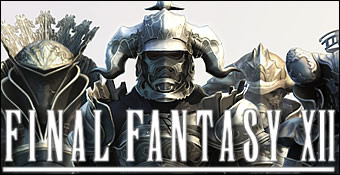
Before Twilight Princess stole my soul I was playing a little indie game called Final Fantasy XII. Some of you may have heard of it (end stupid sarcasm). Most who know me know I love the Final Fantasy series. I fell in love with FFVIII (best game ever, in my opinion) and thanks to re-releases own every game from FF3-FFXII. Final Fantasy XII has been in the making for quite some time and is a revolution of sorts in the series.

Without getting any more hyper-dorky than I already have, traditionally Final Fantasy games have been turned based. You input commands, and then the AI does. But in FFXII it is quasi-real time, a lot like your MMORPG’s. Like most people I was doubtful at first, if it ain’t broke don’t fix it. But the Gambit system (you program your party members’ actions and set them in priority) is deep, rewarding, and user-friendly.

But what sets the FF franchise aside from other games is high production value and sweeping storyline. The game is almost a vehicle to advance the story, not the other way around. I won’t give away any details but the story is very political in nature involving: murder, suicide, betrayal, and war. The story unfolds in gorgeous cutscenes that really are the last hurrah for the PS2. Characters are interesting, well voiced, and believable. Graphically the game is a wonder and probably the best on the PS2.

Any fan of RPG’s owes it to themselves to play FFXII; it is the best RPG available on the PS2 and is in the top 5 best Final Fantasy games ever. Which is quite the statement.

Between FFXII and Zelda it is going to be tough to focus on unimportant things like “school work”, “grades”, “sleeping”, “eating”, and “bathing properly”.


Images courtesy of:
http://www.zelda-aventures.info/images/twilight.jpg
http://image.jeuxvideo.com/images/p2/f/f/ff12p200b.jpg